If you have spent more than five minutes scrolling through an online casino lobby, you have likely felt the overwhelm. There are thousands of icons, flashy animations, and promises of "big jackpots." If you are trying to decide whether to play slots, table games, or live dealer options, you aren't alone. Most players just click whatever looks prettiest, but that is the fastest way to misunderstand how your session is actually going to play out.
I have spent the last eight years reviewing sites and audit logs. I have seen the good, the bad, and the downright dishonest. Let’s cut through the marketing fluff and look at the mechanics behind these games.
The Foundation: Randomness and Fairness
Before you place a single bet, you need to understand that these games aren't "lucky" or "unlucky." Every digital casino game operates on a Random Number Generator (RNG). An RNG is a computer algorithm that ensures every spin or card draw is completely independent of the one that came before it.
If a slot machine hasn't paid out in an hour, it is not "due" to pay out. The machine has no memory. If you see a site claiming their slots are "hot" or "due to hit," close the tab immediately. That is a red flag. Legitimate, UK-licensed sites regulated by the UK Gambling Commission (UKGC) use RNGs that are independently tested to ensure they are truly random. When you play at reputable platforms like MRQ, you are engaging with audited software, not magic.
Key Metrics: RTP and Volatility
When comparing slots vs table games, you need to look at two specific numbers found in the game information menu: Return-to-Player (RTP) and volatility.
- RTP (Return-to-Player): This is the theoretical percentage of all money wagered that a game will pay back to players over a massive number of spins. If a game has an RTP of 96%, it means that over millions of spins, the house keeps 4%. It does not mean you are guaranteed to get back £96 for every £100 you spend in a single session. Volatility: This describes the "rhythm" of the game. High volatility games pay out less frequently, but the potential wins are larger. Low volatility games pay out small amounts very often, keeping your balance stable for longer.
Breaking Down the Categories
1. Slots: The Speed Demons
Slots are the most popular category for a reason: they are simple. You press a button, and the RNG does the rest. However, the game pace is the hidden danger here. Because you can trigger hundreds of spins in a single hour, your bankroll can vanish faster than you realize. If you prefer high-energy visuals and don’t want to think about strategy, slots are your go-to. Just remember that there is no such thing as a "guaranteed win" strategy for slots.
2. Table Games: The Strategist’s Choice
If you want more control, look at Blackjack or Baccarat. In these games, your decisions—whether to hit, stand, or double down—actually impact the outcome. The house edge in these games is often lower than in slots, provided you know the basic strategy. This is where you trade the high-octane excitement of slots for a slower, more analytical experience.
3. Live Dealer: The Social Compromise
Live dealer choice is perfect for those who miss the atmosphere of a land-based casino. You get a real human dealer, real cards, and a social chat element. The game pace is dictated by the dealer, which is naturally slower than digital versions. This inherent slowness acts as a built-in speed bump, which is generally better for responsible bankroll management.
The Common Mistake: Confusing "Buy-in" with Budgeting
One of the most persistent myths I encounter in casino reviews is the idea of "prices" to enter a game. Let’s clear this up: there is no such thing as an entry fee for a standard online casino game. You will see some guides claiming you need a specific "deposit amount" to play certain slots—this is nonsense.
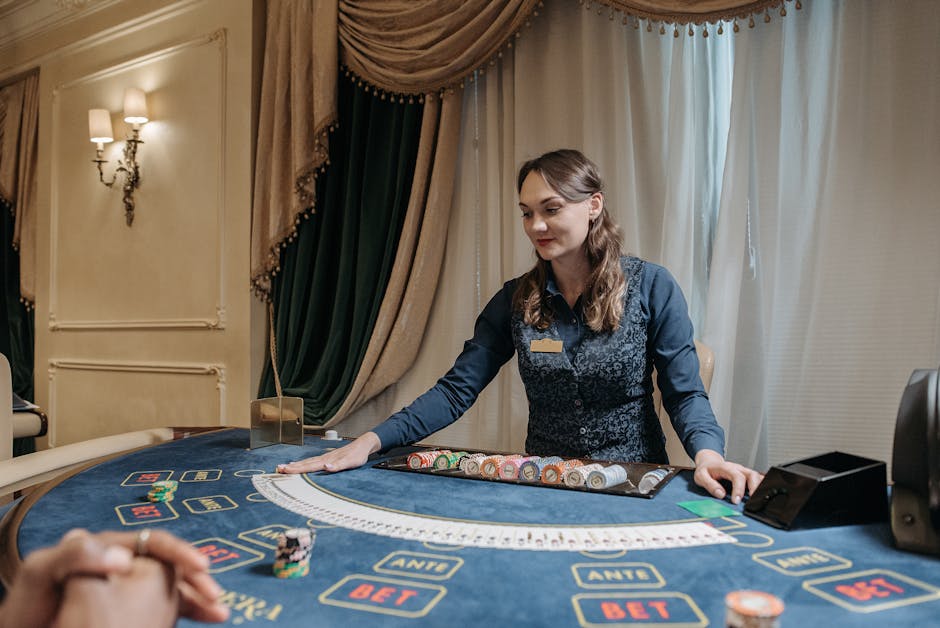
Whether you are playing a digital slot or a live roulette table, you decide your stake per round. A high-volatility slot can be played for pennies, just as a blackjack table might have a minimum bet requirement. Always check the table limits before joining a live game, but never be fooled by articles claiming you need to "buy" your way into a game. If a site demands a flat "entry price," you are likely looking at an unregulated or predatory platform.

How to Choose: A 30-Second Checklist
If you are struggling to decide what to play, use this checklist before you log in:
Check the Pace: Do you want to play 10 rounds a minute (slots) or 1 round a minute (live dealer)? Check the Input: Do you want to use your brain (table games) or just watch the show (slots)? Check the RTP: Always open the "Help" or "Info" tab in the game. If the RTP is below 94%, move on to something else. Verify the Source: Ensure the site is listed on the UK Gambling Commission database. Set a Limit: Decide on a hard stop time and a loss limit before you start.(Image credit: Freepik - used for illustrative purposes.)
Final Thoughts on Expectations
The most important thing I can tell you playing MRQ casino games safely after eight years in this industry is this: no game is a way to make money. Every game on a regulated site is designed to have a mathematical edge for the casino. That is how they keep the lights on and pay their staff. When you pick a game, you are essentially paying for the entertainment value of that hour.
Whether you choose the fast pace of slots or the calculated approach of table games, do it because you enjoy the process, not because you think you have found a "secret" way to beat the system. If you ever feel like you are losing control, sites like MRQ offer excellent responsible gaming toolsets, such as deposit limits and time-outs. Use them. A smart player is one who knows when to walk away—even when they are winning.
If you want to read more about keeping your gameplay safe and clear, stick to sites that provide honest, transparent information about how their games function. Avoid the hype, ignore the "hot" slots, and stick to the math.